What Happened
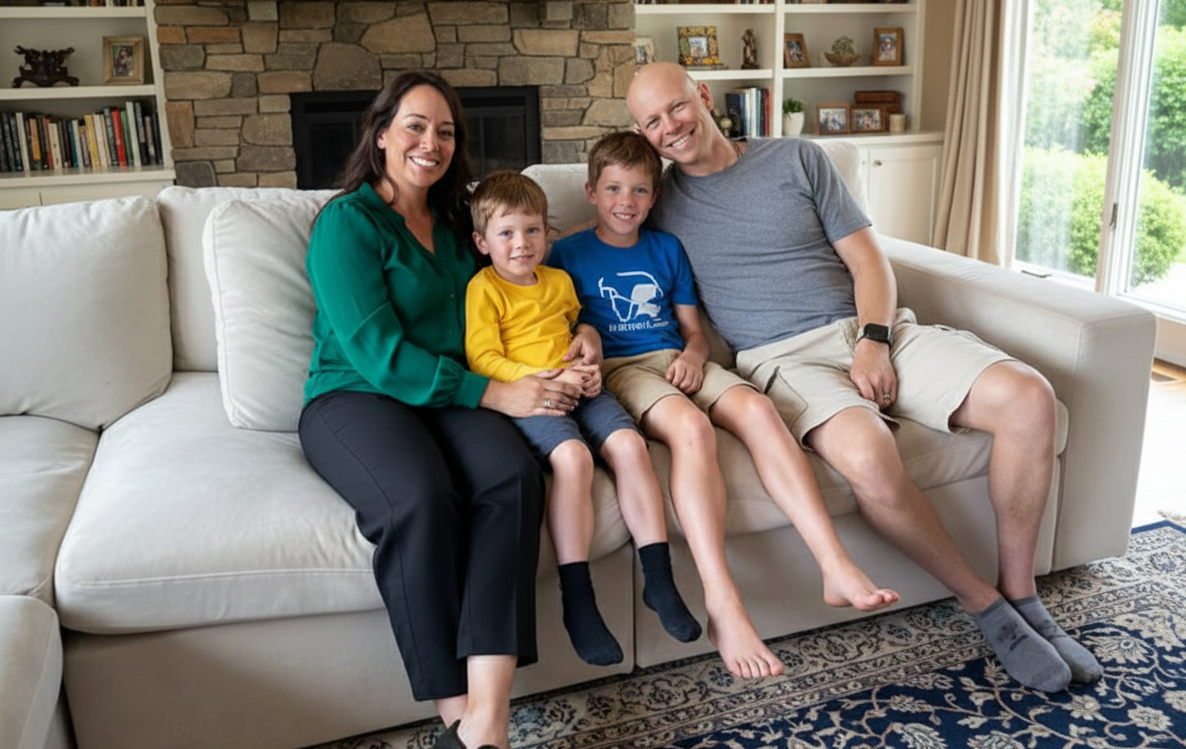
Father & Illness: Dr. Nick Mondek, an anesthesiologist in the Los Angeles area, was diagnosed with acute myeloid leukemia in 2022. He initially went into remission after a stem cell transplant from his brother. However, the cancer relapsed in April 2025.
Searching for a Donor: After relapse, standard avenues—relative donors and the National Bone Marrow Registry—did not yield a suitable match.
Son Steps In: Dr. Mondek had a thought: “How young could you go with a donor?” He asked about testing his son, Stephen, who was 9 at the time of testing (turned 10 in August), to see if he could donate.
The Transplant & Process
Compatibility: It turned out Stephen was a half-match (haploidentical) to his father. Although not a “perfect” match, children as donors + haplo matches have become safer and more effective in many transplant protocols.
Pre-Donation & Collection: Stephen underwent preparation. He was placed under general anesthesia to insert a catheter into a neck vein. His blood was cycled through a machine (centrifuge) that isolates stem cells. The collection procedure took about six hours.
Father’s Preparation: Meanwhile, Dr. Mondek received chemotherapy for several days to suppress his immune system so that the donor cells would be accepted without severe rejection. Then the stem cells were infused.
Outcome So Far
-
Recovery & Home: After the transplant, Nick Mondek stayed in the hospital to allow the transplanted stem cells to engraft and protect the newborn immune system. Later, on August 16, 2025, he was discharged in time to attend the last inning of his son’s Little League game.
-
Prognosis: It could take a year or more to confirm whether Stephen’s stem cell donation will result in sustained remission.
Medical & Ethical Significance
-
Young donor rarity: Children of this age are rarely donors in cases like this. The medical team took extra care to ensure Stephen fully understood what was involved.
-
Half-match transplants: These are becoming more common with advanced conditioning regimens and better protocols to manage risks like graft vs host disease. While a perfect match (like from a sibling) is ideal, haploidentical transplants are viable especially when time is of the essence.
-
Risks & Preparation: For both donor and recipient there are risks—anesthesia, blood collection, immune suppression, infections. The medical team’s role is to manage those risks, monitor closely, and provide follow-up. The emotional/moral burden is also nontrivial.
Human Story & Wider Impacts
-
Courage & Sacrifice: Stephen’s willingness to donate — even at such a young age — shows remarkable courage. Dr. Mondek described the procedure as emotionally intense, especially the part where Stephen was under anesthesia, which was tough for him as a father.
-
Hope for Families: This case brings hope to families in similar situations where a perfect donor match isn’t found. Knowing that haploidentical, younger donors might be an option can broaden possibilities.
-
Awareness & Registries: Stories like this also highlight the importance of donor registries, and of exploring more creative options when standard matches aren’t available.