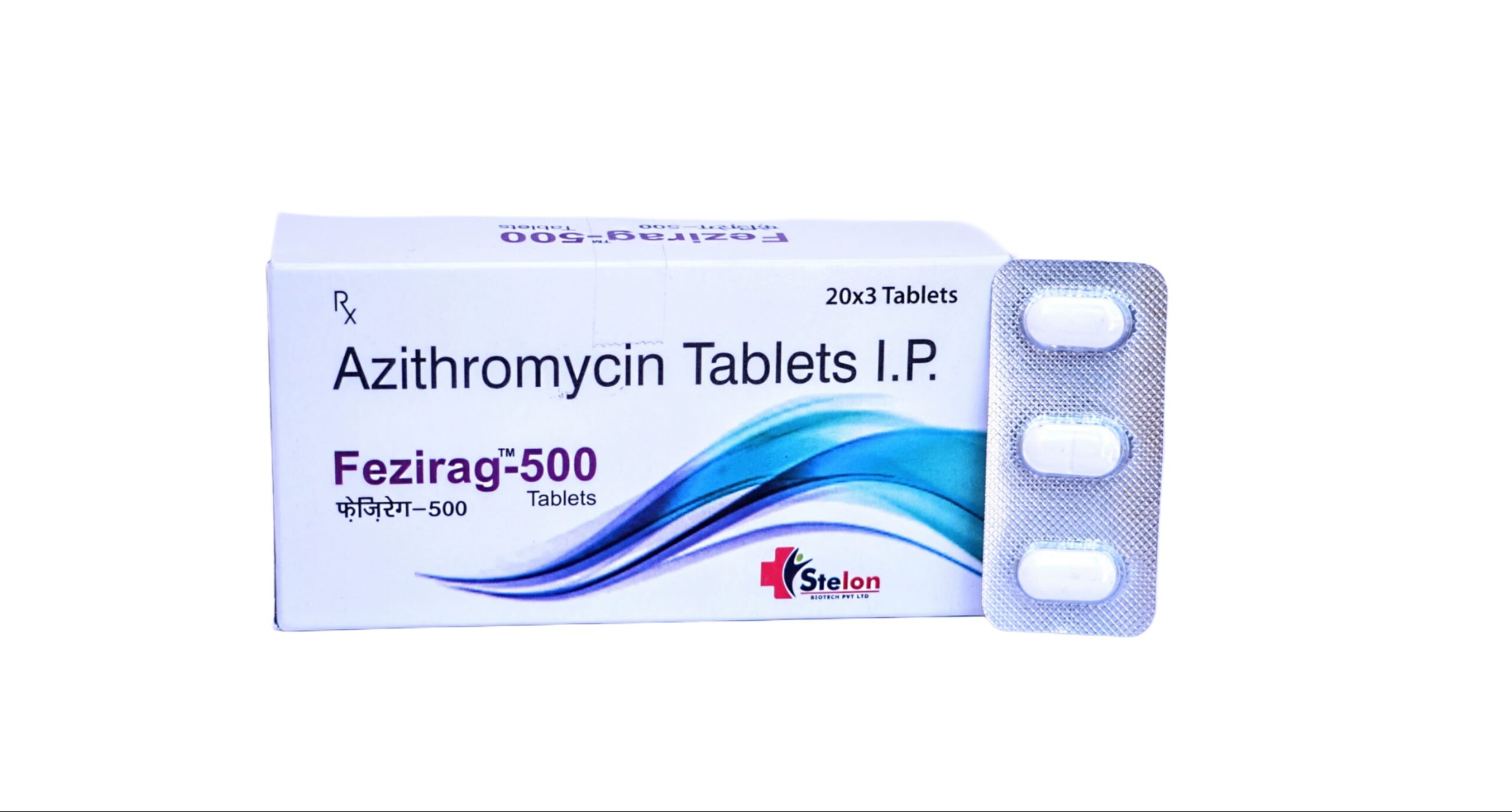
Azithromycin 500 mg is a prescription antibiotic that belongs to the class of macrolide antibiotics. It is widely used to treat a variety of bacterial infections. Azithromycin is known for its broad-spectrum antibacterial activity and its long half-life, which allows for convenient once-daily dosing and shorter treatment courses compared to many other antibiotics.
Table of Contents
Composition and Form
An Azithromycin 500 mg is commonly available in:
Film-coated tablets
Capsules
Powder for oral suspension (in different strengths)
Intravenous formulation (used in hospital settings)
Each tablet contains Azithromycin 500 mg of dihydrate as the active ingredient. Inactive ingredients may include microcrystalline cellulose, starch, magnesium stearate, and film-coating agents, depending on the manufacturer.
Yes, Azithromycin works by inhibiting bacterial protein synthesis. It binds to the 50S ribosomal subunit of susceptible bacteria, blocking the translocation steps in protein elongation. This action prevents the bacteria from growing and multiplying. Because of this mechanism, azithromycin is considered bacteriostatic, though it may exhibit bactericidal activity against certain organisms at higher concentrations.
Azithromycin is effective against a wide range of Gram-positive, Gram-negative, and atypical bacteria, including:
The dosage of azithromycin 500 mg depends on the type of infection:
Respiratory infections, skin infections, sinusitis: Often, 500 mg once daily for 3 days or 500 mg on day 1 followed by 250 mg once daily for 4 more days (total 5 days).
Community-acquired pneumonia: 500 mg once daily for at least 3 days, depending on severity.
Uncomplicated genital infections (e.g. chlamydia): A single 1,000 mg (1 g) dose, which may be given as two 500 mg tablets.
MAC prophylaxis: 1,200 mg once weekly (usually as 3 × 500 mg tablets or appropriate combinations).
Azithromycin can be taken with or without food, though taking it with food may reduce stomach upset.
Pharmacokinetics
Yes, Azithromycin is well absorbed after oral administration, with peak plasma concentrations occurring 2 to 3 hours post-dose. It has excellent tissue penetration, with tissue concentrations often exceeding serum concentrations. Azithromycin has a long elimination half-life (about 68 hours), allowing for short-course therapies.