
overview
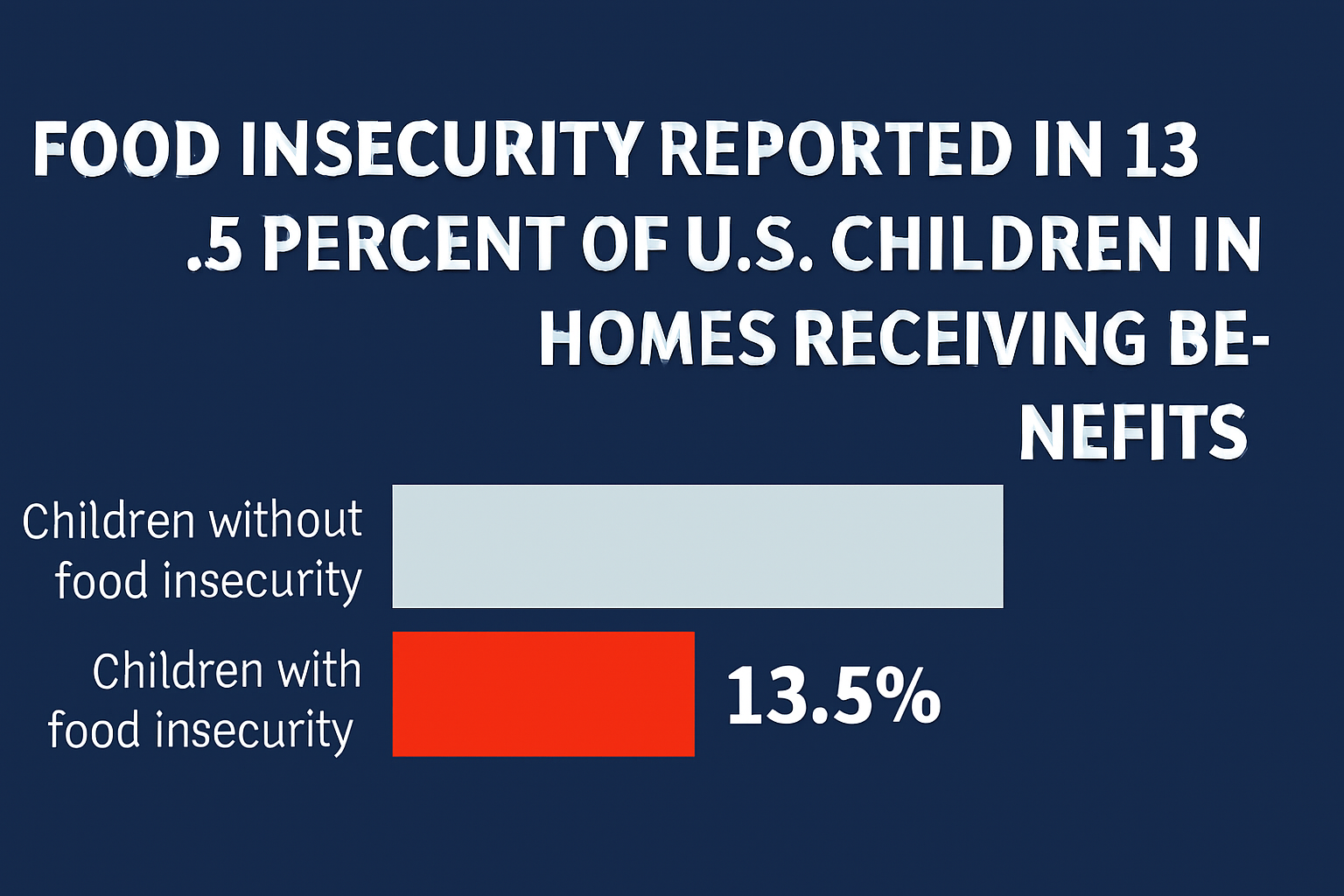
Food insecurity continues to be a pressing issue in the United States, especially among families with children. According to recent data from the U.S. Department of Agriculture (USDA), about 13.5 percent of children living in households that receive government assistance—such as SNAP (Supplemental Nutrition Assistance Program) or WIC (Women, Infants, and Children)—experienced food insecurity in the past year. This statistic reveals that, despite support programs, many American families still struggle to provide consistent access to nutritious food for their children.
Understanding Food Insecurity
Food insecurity is defined as the lack of consistent access to enough food for an active, healthy life. It does not necessarily mean a complete absence of food, but rather uncertainty about where the next meal will come from or the need to compromise on food quality and quantity.
In children, food insecurity can have serious consequences—affecting growth, learning, emotional well-being, and long-term health outcomes. Even moderate food insecurity can result in poorer academic performance and higher risks of chronic illnesses such as diabetes and obesity.
Impact on Children in Benefit-Receiving Households
The fact that 13.5 percent of children in homes receiving benefits remain food insecure highlights the limitations of current safety net programs. Many families participating in federal assistance programs live near or below the poverty line, and inflation, rising food prices, and housing costs have further strained their budgets.
For these families, government aid often helps but does not fully cover their needs. As a result, parents may skip meals to feed their children, depend on cheaper but less nutritious food, or rely on community food pantries. These coping strategies may reduce hunger in the short term but lead to nutritional deficiencies and poor health outcomes over time.
Contributing Factors
Several factors contribute to persistent food insecurity among benefit-receiving households:
Insufficient Benefit Levels: SNAP and WIC benefits, while helpful, may not fully match the current cost of living or local food prices.
Rising Costs of Essentials: Inflation has significantly affected the affordability of groceries, utilities, and rent.
Limited Access to Healthy Food: In some areas, especially rural or low-income urban neighborhoods, there is a lack of grocery stores offering fresh produce and healthy options.
Employment Instability: Many low-income parents work in part-time or seasonal jobs without stable incomes or benefits.
Lack of Awareness: Some families are unaware of the full range of benefits or community programs available to them, such as school meal programs or local food banks.
Government and Community Responses
In response to these challenges, various initiatives aim to improve food security. The Biden Administration’s National Strategy on Hunger, Nutrition, and Health seeks to end hunger in America by 2030 through expanded access to healthy meals, support for nutrition education, and stronger benefit programs.
Additionally, community organizations and local governments play a vital role. Food banks, mobile food pantries, and school-based meal programs help bridge the gap for families who struggle to make ends meet. Partnerships between nonprofits, private companies, and government agencies are proving effective in reaching vulnerable populations.
Conclusion
While U.S. benefit programs like SNAP and WIC are essential lifelines, the finding that 13.5 percent of children in benefit-receiving homes remain food insecure underscores the need for policy improvement and expanded support. Ensuring that every child has reliable access to nutritious food is not just a matter of health—it is an investment in the nation’s future.
Reducing food insecurity requires coordinated action from government, community organizations, and individuals to create a society where no child goes hungry, regardless of their economic status.