
Introduction: The Hidden Risk in Clinical Research
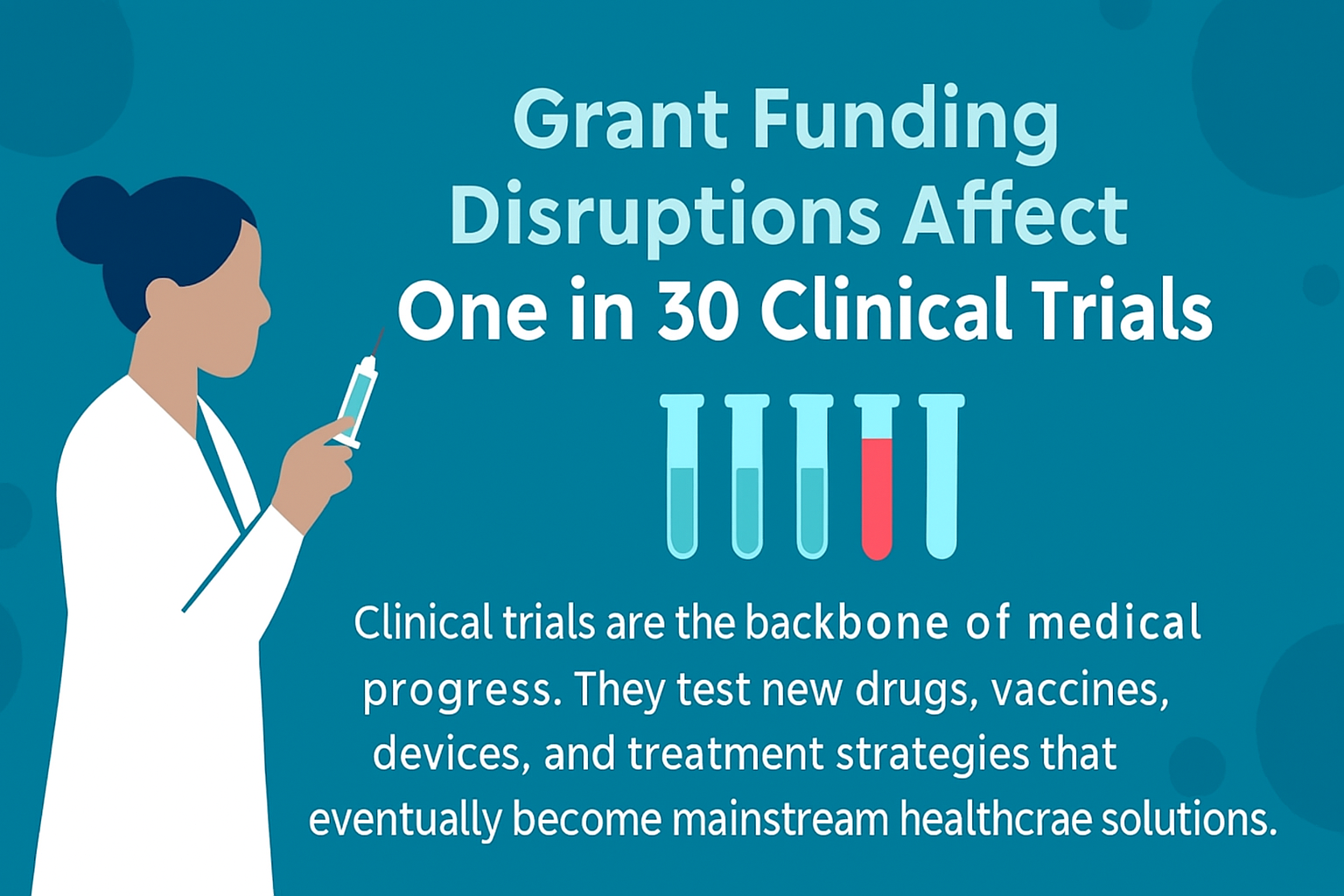
Clinical trials are the backbone of medical progress. They test new drugs, vaccines, devices, and treatment strategies that eventually become mainstream healthcare solutions. However, a new analysis has revealed a major but often overlooked threat: grant funding disruptions affect nearly one in every 30 clinical trials. These disruptions can severely delay research, increase costs, or even force complete termination of promising studies. As clinical trials grow more complex and expensive, the stability of funding becomes more important than ever.
What Causes Funding Disruptions?
Clinical trials depend on consistent financial support from government agencies, universities, nonprofit organizations, and private companies. Funding can be disrupted for several reasons:
A. Administrative Delays
Slow approval processes, documentation errors, or changes in leadership may delay grant disbursement.
B. Budget Cuts and Policy Changes
Government funding agencies sometimes reduce budgets due to political or economic shifts. Such cuts can immediately affect ongoing research.
C. Sponsor Withdrawal
Corporate sponsors may pull out if early trial results look weak, if priorities shift, or if competing products show better promise.
D. Economic Uncertainty
Recession, inflation, or rising operational costs can limit organizations’ ability to continue funding.
E. Institutional Financial Problems
Universities and research institutes may face budget shortages that affect payroll, equipment purchases, or trial logistics.
Impact on Clinical Trials and Participants
A funding disruption can be more damaging than a scientific setback. It can trigger multiple negative consequences:
A. Delays in Recruitment and Enrollment
Without enough money, sites cannot hire staff, run advertisements, or screen participants effectively. This slows down trial progress and timelines.
B. Loss of Participant Engagement
Patients enrolled in trials rely on consistent communication, checkups, and treatment schedules. Disruptions may cause participants to drop out, reducing data quality.
C. Compromised Data Integrity
Interruptions in sample collection, follow-up visits, or lab testing can lead to incomplete datasets, reducing the reliability of results.
D. Increased Trial Costs
Delays often raise operational expenses—extending study duration, renting facilities longer, and paying staff overtime.
E. Early Termination of Promising Research
In the worst cases, trials end prematurely even when early results show potential. This wastes resources and slows the development of life-saving treatments.
Areas Most Affected by Disruptions
Not all clinical trials are equally vulnerable. Studies show higher disruption rates in:
Early-stage exploratory trials
Investigator-initiated academic research
Rare disease studies with limited funding sources
Public health trials dependent on government budgets
Small biotech company–sponsored trials
These trials already operate with tight budgets and fewer resources, making them more sensitive to financial instability.
Why Funding Stability Is Crucial
Funding flexibility allows researchers to adapt to changes—for example, modifying study design, expanding recruitment, or adding safety monitoring. Stable funding ensures:
Continuous patient care
Strict adherence to ethical protocols
Reliable data collection
Faster completion of research
Stronger public trust in clinical science
When funding is unstable, trial outcomes suffer, and scientific momentum slows.
Strategies to Reduce Funding Disruptions
Strengthening financial systems can significantly improve trial success rates.
A. Diversified Funding Sources
Researchers should pursue multiple grants rather than relying on a single sponsor.
B. Contingency Budgets
Building emergency funds or backup financial plans helps cover unexpected costs.
C. Improved Grant Management
Streamlining administrative processes reduces delays and improves compliance.
D. Transparent Communication Between Sponsors and Researchers
Regular updates help prevent sudden withdrawal of funds.
E. Governmental and Institutional Support
Policies that secure long-term research budgets ensure stable investment in public health innovations.
Conclusion
A funding disruption may seem like a financial inconvenience, but in clinical research, it can halt progress, impact patient safety, and delay the arrival of life-saving treatments. The fact that one in 30 clinical trials faces financial interruptions highlights the need for stronger funding models, better planning, and improved institutional support. Ensuring stable financial pathways is essential for medical innovation and for the millions of patients who depend on new therapies and scientific breakthroughs.