
Introduction: What Is the Exposome?
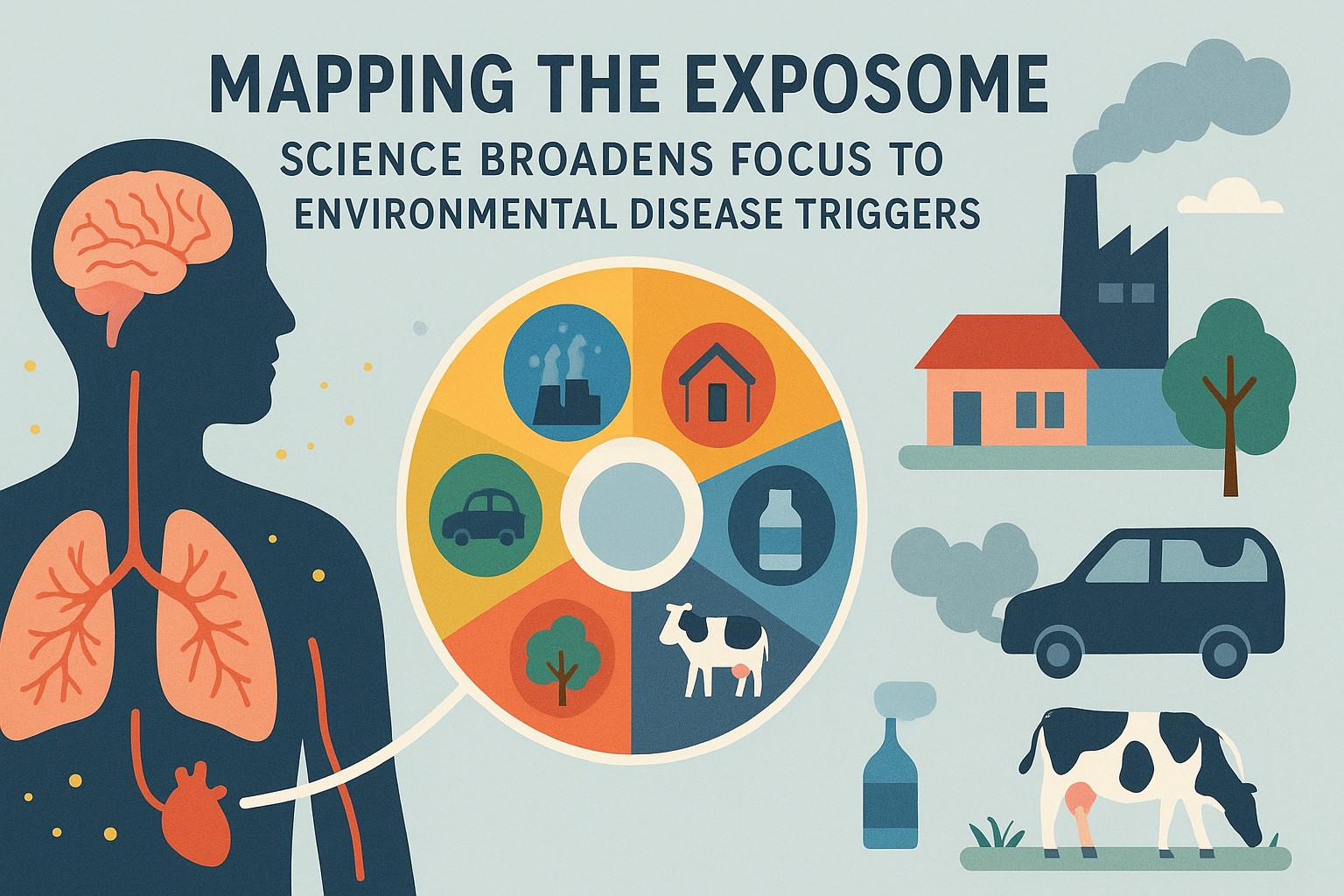
The exposome refers to the totality of environmental exposures a person experiences throughout life—from chemicals and pollutants to lifestyle, diet, infections, and even psychosocial stress. While the genome explains biological predispositions, the exposome aims to explain how non-genetic factors contribute to disease. This shift in focus recognizes that chronic illnesses such as asthma, cancer, diabetes, and cardiovascular disorders often arise from complex interactions between genes and environment, not genes alone. Mapping the exposome is therefore becoming crucial to understanding public health challenges in the modern world.
Why Study the Exposome? The Disease Burden of Environmental Factors
Research shows that environmental exposures account for a significant share of global disease. Pollution is linked to millions of premature deaths each year, while lifestyle-related risks such as unhealthy diet, smoking, and stress fuel epidemics of obesity and mental health disorders. Traditional studies often examined one toxin or risk at a time, but real life involves multiple overlapping exposures. This has made it difficult to identify specific triggers. The exposome approach offers a holistic lens, capturing the full range of exposures over time to better pinpoint which environmental factors drive disease.
Key Components of the Exposome
The exposome is usually divided into three major domains:
a. General External Exposures
These include socioeconomic status, urban vs. rural living, climate, air pollution, noise, and neighborhood conditions. For example, living near highways or industrial areas increases the risk of respiratory diseases due to particulate matter and nitrogen oxides.
b. Specific External Exposures
This category covers direct exposure to chemicals, pesticides, heavy metals, microplastics, pharmaceuticals, allergens, infections, and lifestyle habits like smoking or diet. These exposures frequently change and can accumulate or interact with one another.
c. Internal Exposures
These are biological responses inside the body—such as inflammation, metabolite levels, hormones, oxidative stress, and gut microbiome composition. Internal markers help scientists understand how external exposures cause biological changes that eventually lead to illness.
How Scientists Map the Exposome
Advances in technology have made exposome mapping possible. Researchers use:
Wearable sensors to track air quality, temperature, physical activity, and noise exposure.
Omics technologies—metabolomics, proteomics, epigenomics—to detect internal biological changes.
Environmental monitoring networks that gather data on pollutants, chemicals, and climate conditions.
Big data analytics and AI to integrate millions of exposure data points across populations.
Biobanks and long-term health studies to compare exposure histories with disease development.
This combination of continuous monitoring and advanced analytics provides a dynamic picture of how exposures accumulate throughout life.
Links Between the Exposome and Human Diseases
Scientists have uncovered numerous associations using exposome methods:
Air pollution increases risks of asthma, chronic lung disease, and heart attacks.
Endocrine-disrupting chemicals such as BPA and phthalates affect reproductive health and metabolic disorders.
Heavy metals like lead and arsenic are linked to neurological and developmental problems.
Diet and gut microbiome interactions influence diabetes, obesity, and immunity.
Early-life exposures—including maternal stress, smoking, and poor nutrition—have long-lasting effects through epigenetic changes.
Mapping these exposures helps identify which combinations are most harmful.
Challenges in Exposome Research
Studying the exposome is complex. Exposures constantly change, are hard to measure accurately, and differ widely between individuals. There is also the challenge of linking exposure data with long-term health outcomes, which often requires decades of monitoring. Privacy concerns and the need for global data-sharing further complicate progress.
Future Directions and Public Health Impact
As exposome science advances, it promises to transform medicine. Personalized exposure profiles may help doctors predict disease risks more precisely. Governments may use exposome maps to create cleaner cities, regulate harmful chemicals, and design targeted health interventions. Ultimately, understanding the exposome could lead to more effective prevention strategies, shifting focus from treating diseases to eliminating their environmental causes.