
Overview
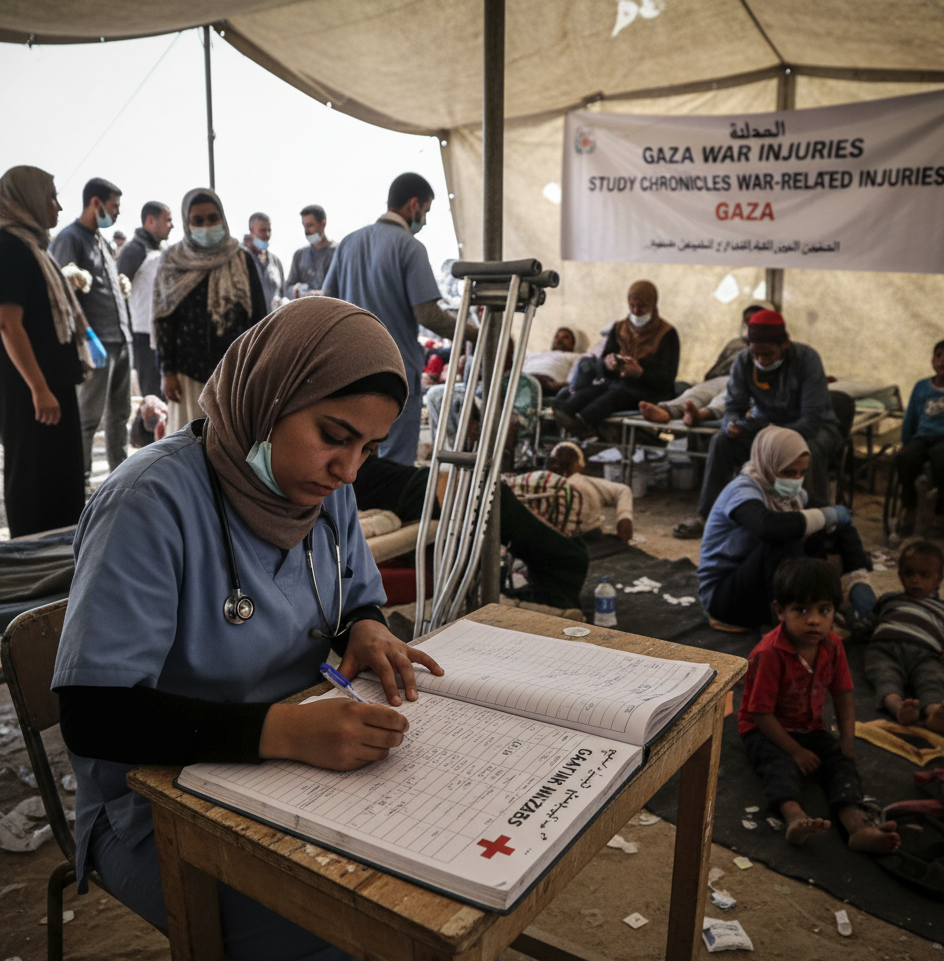
A major study published in The BMJ in September 2025 documented war-related injuries among civilians in Gaza, based on a survey of 78 international healthcare workers who were deployed from August 2024 to February 2025.
The goal was to systematically document the types, anatomical locations, and severity of trauma, weapon-related injuries, and general medical and obstetric conditions, to better inform humanitarian, surgical, rehabilitation, and long-term health responses.
Key Findings
Scale of injury
Healthcare workers reported 23,726 trauma-related injuries in total, plus 6,960 injuries specifically tied to weapons.
The injuries were not confined to limited anatomical regions: about 70% of respondents managed injuries across two or more anatomical regions.
Types of trauma
Among all traumatic injuries (not just weapons), the most common were:
Burns: ~18.3% (~4,348 cases)
Lower limb injuries: ~17.9% (~4,258 cases)
Upper limb injuries: ~14.9% (~3,534 cases)
Weapon-related injuries
Explosive injuries made up the majority (≈ 66.6%) of weapon-related trauma (~4,635 cases), and tended to cause damage to critical areas such as the head, which accounted for ~27.8% of weapon injuries.
Firearm injuries less common than explosive ones, but when present, tended to disproportionately affect lower limbs (~22.6% of firearm injuries).
Obstetric and general medical conditions
There were 742 obstetric-related trauma cases reported. Of these, in about 36% of cases, there was fetal death, maternal death, or both.
General medical problems were also widespread: malnutrition, dehydration, sepsis, gastroenteritis among them. Long term conditions also featured: 4,188 people with chronic diseases requiring ongoing treatment.
Severity and unusual patterns
Health-care workers described the injuries as unusually severe, with catastrophic burns (especially in children), multi-limb trauma, open skull fractures, internal organ damage.
Mass casualties were frequent: 77% of respondents managed 5-10 mass casualty events; 18% handled more than 10.
Complementary Data
Another hospital-based study (108 trauma casualties, over a shorter period) found that explosive injuries made up ~86% of injuries, gunshot wounds about 8%, multiple injuries per patient on average (~1.73), and a very high infection rate in fractures.
WHO estimates suggest that about 25% of all people injured (up to ~22,500 people) will have acute and ongoing rehabilitation needs: amputations, extremity injuries, head/spinal cord injuries, burns.
Challenges / Limitations
Data collection was via logbooks, shift records, surveys among deployed medical staff: during times of mass influx the records may be incomplete or delayed. Possibility of duplication exists though study authors believe limited impact on totals.
Access issues, resource constraints, disruption of supplies, infrastructure damage make both treatment and data gathering harder.
Implications
Healthcare & surgical response
The high rate of explosive injuries and burns requires specialized surgical capacity, burn units, reconstructive surgery, capacity to manage head trauma, amputations.
Lower limb and upper limb injuries are common and may lead to long-term disability without timely intervention.
Rehabilitation needs
Given the estimates, many survivors will need long-term rehabilitative care: physiotherapy, prosthetics (for amputations), psychological rehabilitation.
Rehabilitation services are severely disrupted and currently far below what is needed.
Obstetric mortality
The fact that over a third of obstetric trauma cases resulted in fetal, maternal, or combined death underscores the risk to pregnant women, need for continuity of obstetric care even during conflict.
Mental health burden
Psychological trauma (depression, acute stress reactions, suicidal ideation) is a serious reported outcome, intertwined with physical injuries, loss, displacement, and destruction of community infrastructure.
Policy, surveillance & system-building
Authors recommend establishing resilient surveillance systems capable of operating under the conditions of conflict, with intermittent telecoms, resource scarcity, for better planning.
Also need for preparedness in humanitarian settings: supply chains, hospital infrastructure, injury management protocols, rehabilitation services.
Conclusion
The study presents compelling evidence that injuries sustained in Gaza in the current conflict are widespread, severe, and complex, particularly from explosive weapons and burns. The patterns exceed those seen in many prior recent conflicts, especially in terms of combined injuries, high number of anatomical regions affected, severity, and spread of complications (like infections). The humanitarian, surgical, and rehabilitative systems are under enormous strain; many more resources and planning will be needed to address both the acute injuries and the long-term disability and psychological harm.
If you like, I can prepare a version that compares Gaza injury patterns with those in other recent conflicts (Ukraine, Syria, etc.), or produce key numbers graphically to use for a report.