
Overview
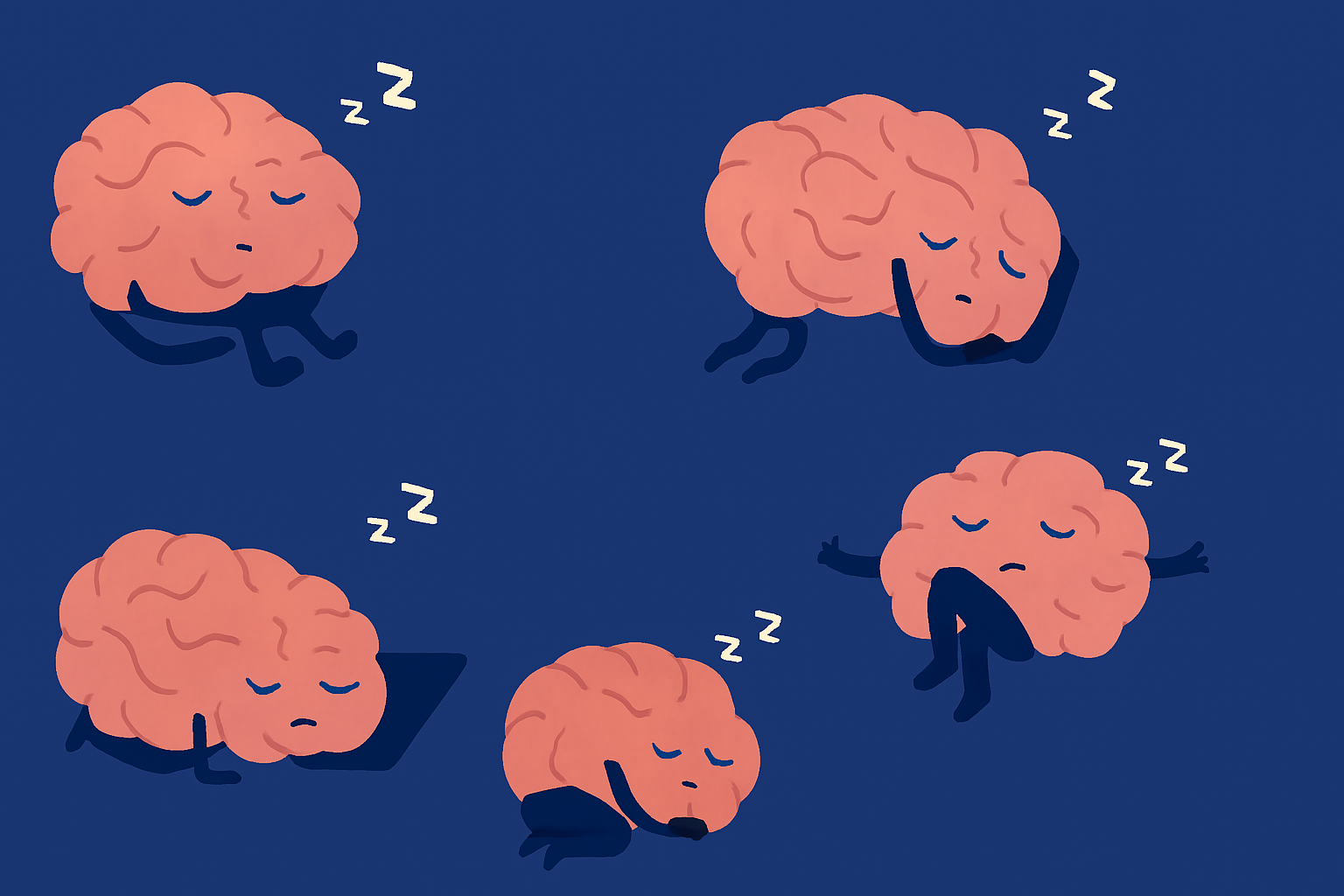
Sleep isn’t a one-size-fits-all process. We all know it’s essential for good health, but what’s less discussed is how you sleep can be just as important as how much you sleep. Research has revealed that there are five main sleep styles, and each one affects your brain in unique ways — influencing everything from memory and mood to creativity and problem-solving.
Let’s explore these five sleep styles and see what your favorite position says about your brain.
1. The Back Sleeper: The Thinker’s Position
Back sleepers lie flat on their backs, often with their arms by their sides or resting on their chest. This style is sometimes called the “soldier” or “supine” position.
Brain Impact:
Sleeping on your back helps keep your spine aligned and allows your head, neck, and shoulders to rest in a neutral position. This encourages proper oxygen flow and reduces pressure points — which means better brain recovery during deep sleep. Studies show that back sleepers often experience fewer headaches and neck pains, allowing for improved mental clarity during the day.
Downside:
If you snore or suffer from sleep apnea, this position can worsen breathing issues. Interrupted breathing can reduce oxygen supply to the brain, affecting focus and alertness.
2. The Side Sleeper: The Brain Cleaner
The most popular sleep style worldwide, side sleeping — particularly on your left side — is considered one of the healthiest positions for the brain and body.
Brain Impact:
A 2015 study published in the Journal of Neuroscience found that side sleeping improves the brain’s waste clearance process (the “glymphatic system”). This system flushes out harmful toxins and proteins like beta-amyloid — which are linked to Alzheimer’s disease. In short, side sleepers may have a lower risk of neurodegenerative disorders and better cognitive longevity.
Downside:
Side sleeping can cause shoulder or hip discomfort, especially without the right mattress support. Using a supportive pillow between your knees helps maintain spinal alignment.
3. The Fetal Sleeper: The Comfort Seeker
Roughly 40% of adults prefer curling up into a ball — the fetal position. It’s a cozy, instinctive posture that offers a sense of security.
Brain Impact:
Fetal sleepers often enjoy a deeper, more restorative sleep because the position can help calm the nervous system. This position is especially common among people who deal with anxiety or stress — as curling inward helps the body feel protected. Quality deep sleep in this posture enhances emotional regulation and stress resilience.
Downside:
The fetal position can restrict deep breathing and may lead to stiffness in the morning. To minimize tension, try keeping your body slightly looser and not too tightly curled.
4. The Stomach Sleeper: The Restless Dreamer
Lying face down might feel comfortable for some, but it’s the least recommended posture from a health perspective.
Brain Impact:
While stomach sleeping can reduce snoring, it often puts strain on the neck and spine. This can restrict blood flow to the brain and interfere with the brain’s ability to detoxify properly during REM sleep. Over time, this can contribute to headaches, poor concentration, and mood changes.
Downside:
It’s tough on the body — especially the spine. If this is your go-to, use a thin pillow or none at all to keep your head from twisting too far.
5. The Starfish Sleeper: The Problem Solver
In this style, sleepers lie on their backs with arms stretched above the head. Though less common, this position has fascinating brain benefits.
Brain Impact:
The starfish position opens up the chest and promotes steady breathing, supporting deep relaxation. People who sleep this way often wake up feeling mentally refreshed and creatively inspired. It’s believed to help balance stress hormones, giving the brain a chance to recover and reset overnight.
Downside:
Like other back positions, it can worsen snoring or acid reflux if the head isn’t properly elevated.
Final Thoughts
Your sleep style is more than just a comfort preference — it’s a window into how your body and brain rejuvenate. While side sleeping remains the healthiest option overall, what matters most is consistency and comfort. Invest in good pillows, maintain a relaxing bedtime routine, and listen to your body.
A well-rested brain doesn’t just think better — it feels better. Sweet dreams!